Peacebuilding & Social Cohesion
Cross-Border Community Resilience Activity
Bringing two clans back into conversation after a decade of conflict, putting 80 displaced women through business training, and keeping 400 girls in school.
Project at a glance
Delivered in full
Every activity in the grant agreement was completed, and every target was met exactly. Nothing was left pending at closure.
Girls received dignity kits
Women trained in business and financial literacy
Leaders trained in natural resource co-sharing
Elders and officials at the cross-border peace dialogue
The challenge
Where the drought ends, the dispute begins
Along the Ethiopia–Kenya–Somalia border, drought and conflict feed each other. When pasture and water shrink, the arguments over who may use them turn deadly.
Across Liban and Afder zones, repeated seasonal failure has pushed pastoral and agro-pastoral families out of herding and farming and into displacement sites. Refugee arrivals in Dollo Ado have added pressure to the same land and water. Communities we spoke to named the problems themselves: waterpoints badly managed, communal rangeland fenced off, land taken and settlements expanding, deforestation and overgrazing, and flooding from the Dawa and Genale rivers.
Underneath that sat a decade of fighting between the Garre and the Dogodia along the Liban–Dawa borderlands — two groups who describe themselves as descendants of the same clan tree. Grazing areas were closed off, livestock raided, trade stopped and families separated.
And in the rural schools, a quieter loss. Girls from poor households could not afford sanitary products, used rags instead, were mocked for it, and stayed home — losing a week or more of lessons every month.
What we did
Four things, done properly, in one year
We got the right people in one room first. A familiarisation workshop brought 45 people from Dollo Ado, Bokolmayo and Dollo Bay together — district officials, community leaders and NGOs — so the work was owned locally from day one.
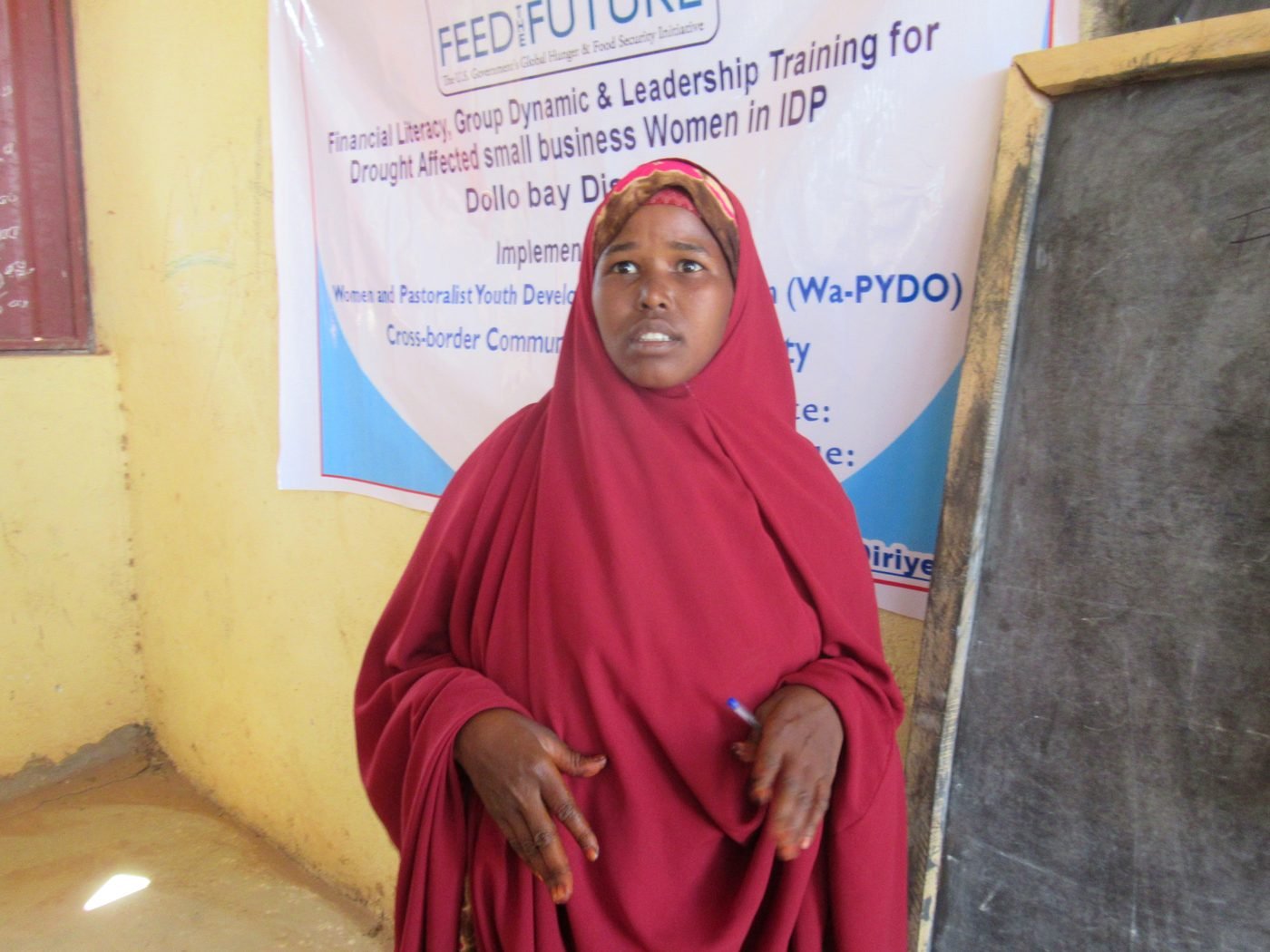
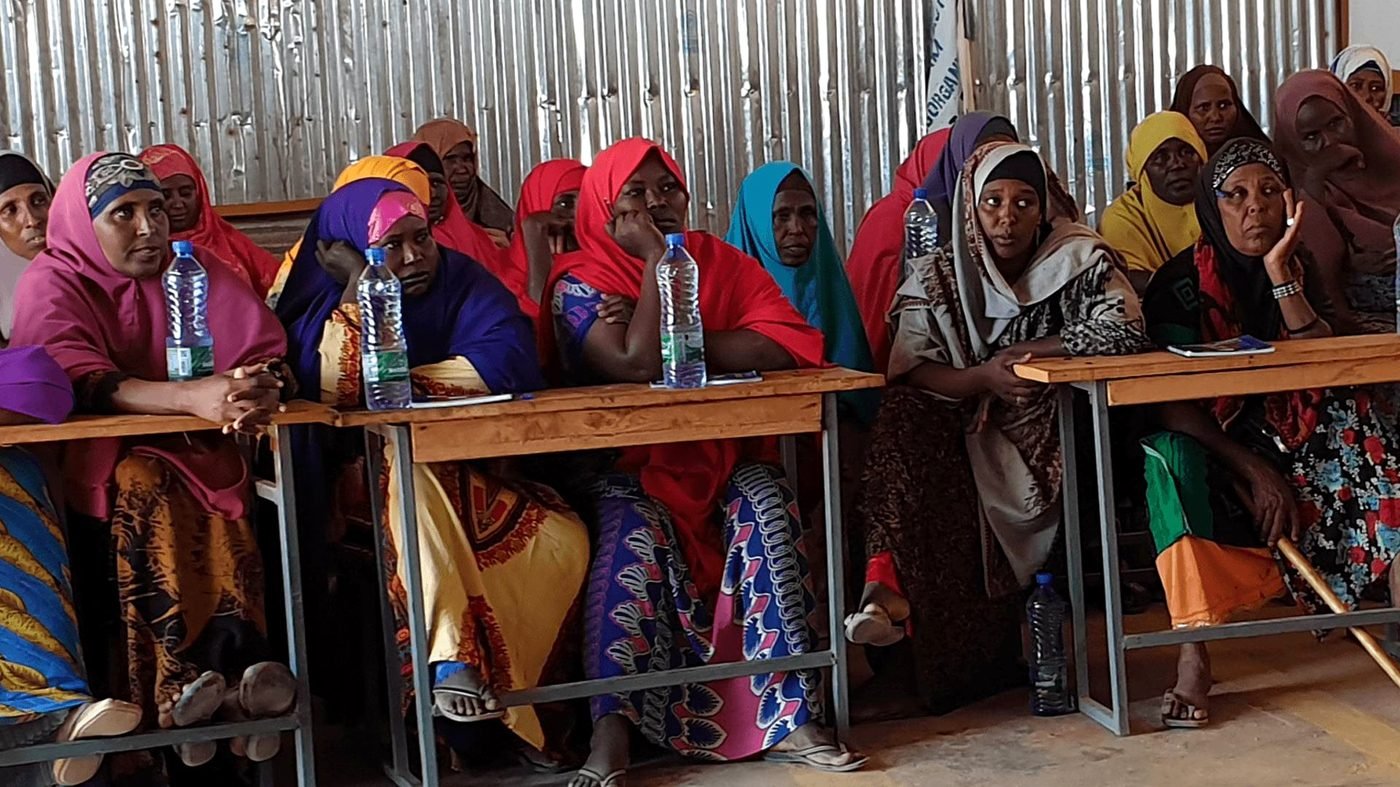
We backed women who were already trading. Somali women here run a traditional savings system they call Ayuta, but businesses fail for want of basic skills. We ran a five-day course in financial literacy, group dynamics and leadership for 80 women — 30 at the Bokolow displacement site, 25 in Kuraley and 25 in Bokolmayo — covering bookkeeping, saving, break-even points, loans and using a mobile phone for business. Participants were selected with the district administrations, the gender and cooperative offices and clan leaders, and the criterion was simple: women running a small business who had never been trained.
And two things that only work if you do them face to face
- A two-day natural resource co-sharing meeting with 45 participants, 15 from each district, mapping which resources are communal and which are individual, and how use on one side of a border affects the other
- A recommendation, agreed by participants, to reactivate the natural resource management committees in all four bordering districts — including Dollo on the Somali side — and to run traditional and modern management systems side by side
- A cross-border peace dialogue in Moyale, hosted by Garre elders and the Dawa zone administration for the Liban Dogodia community, held at the written request of the Liban Zone Administrator
- 40 participants brought from Dollo Ado, Bokolmayo, Filtu and Deka, with the Moyale and Liban administrators moderating
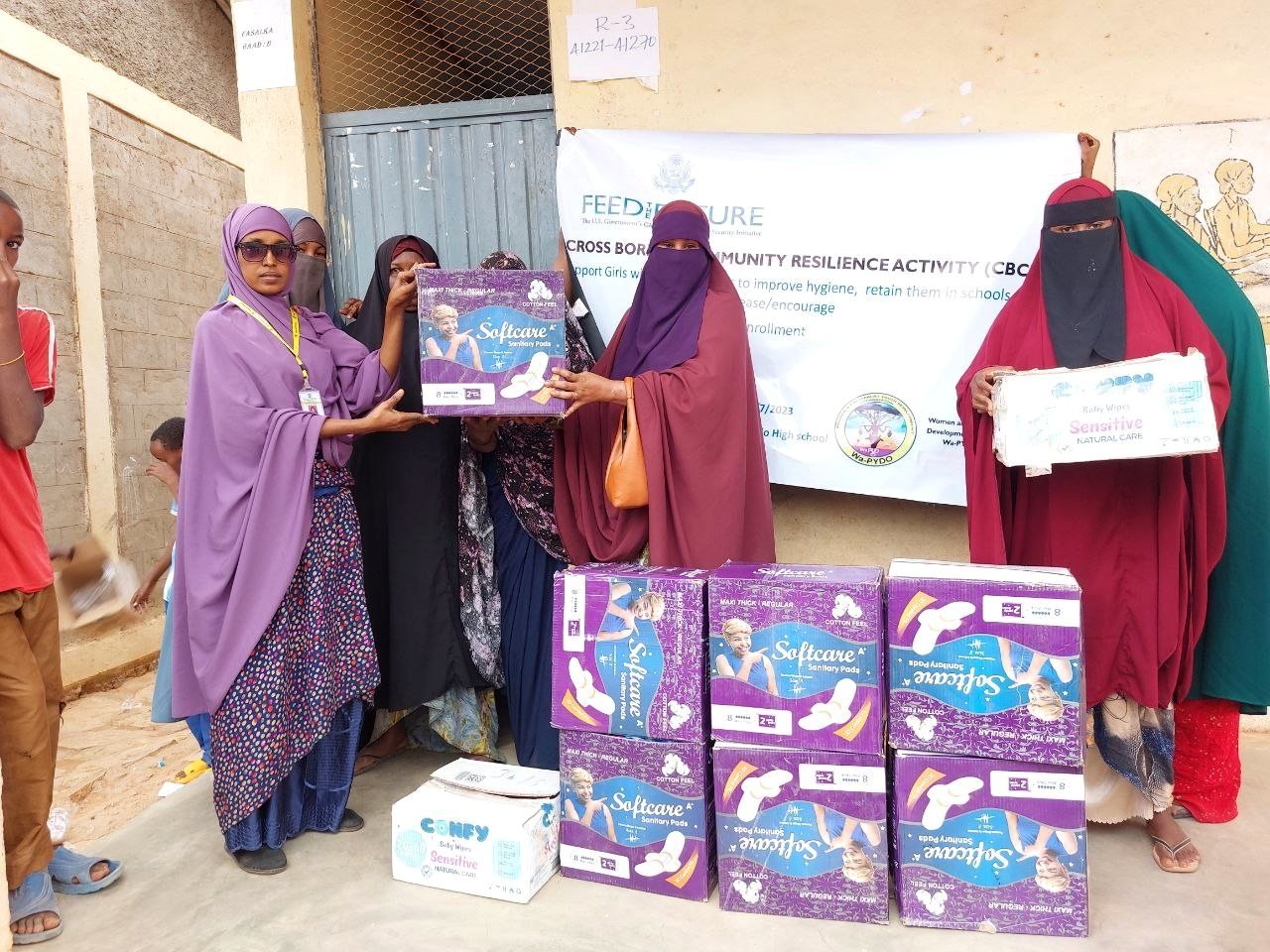
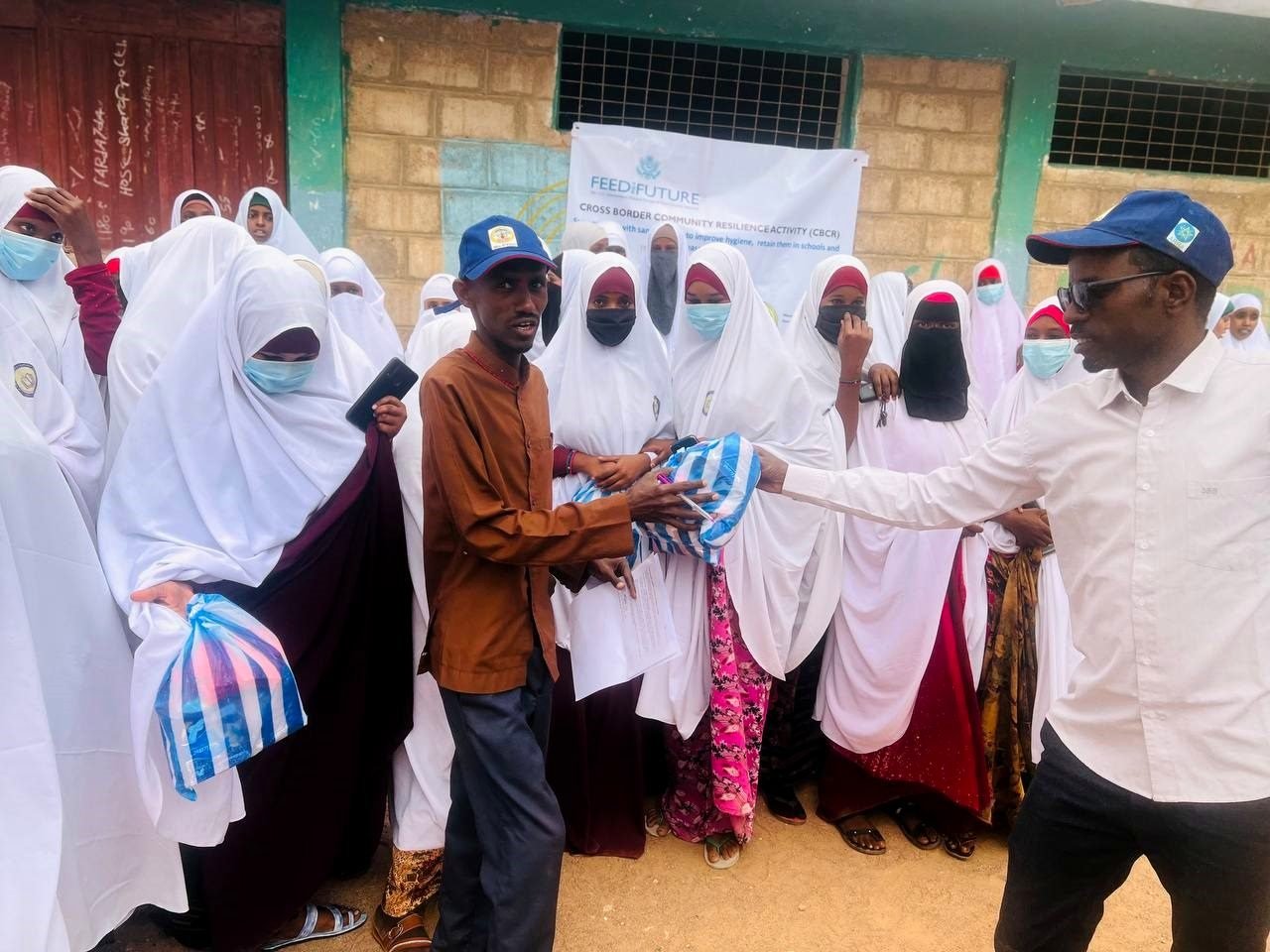
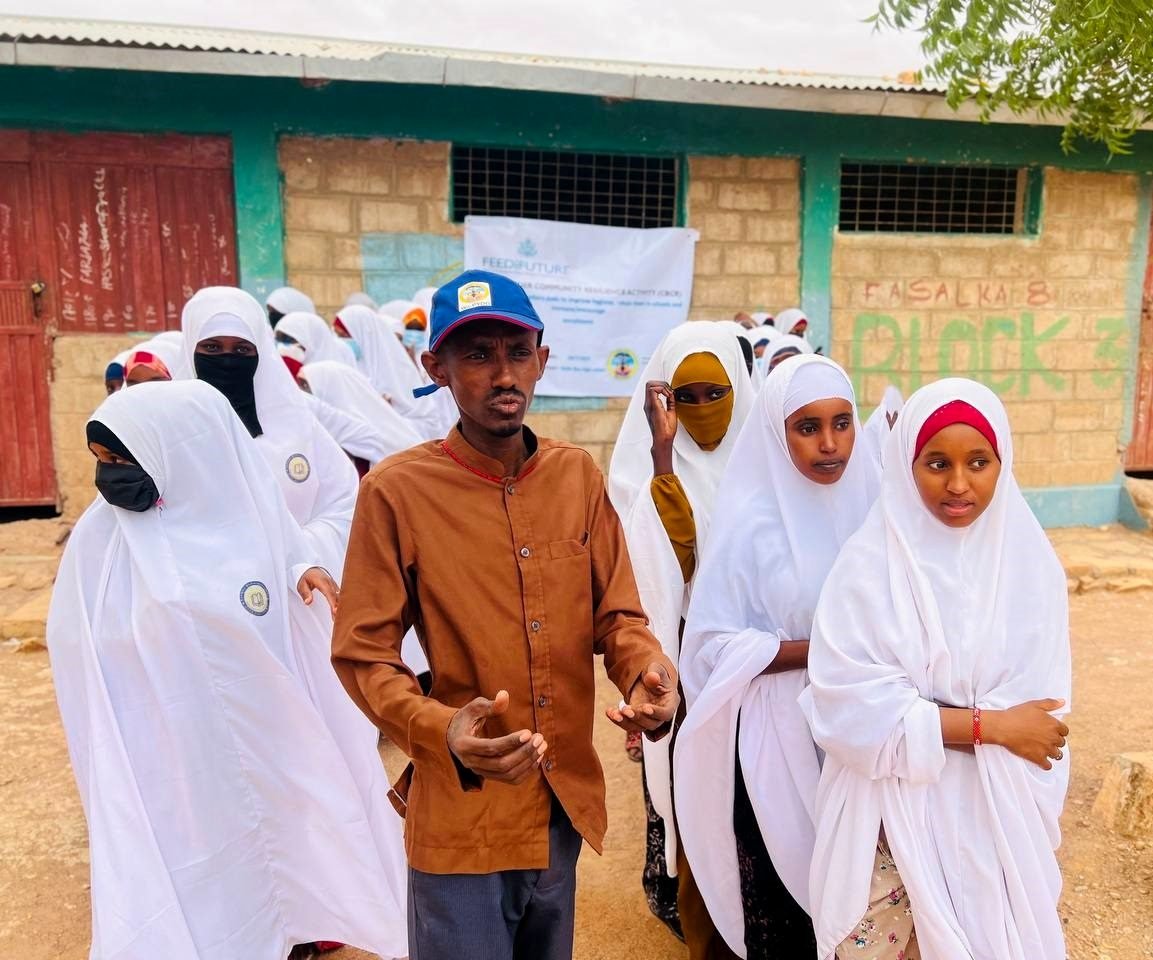
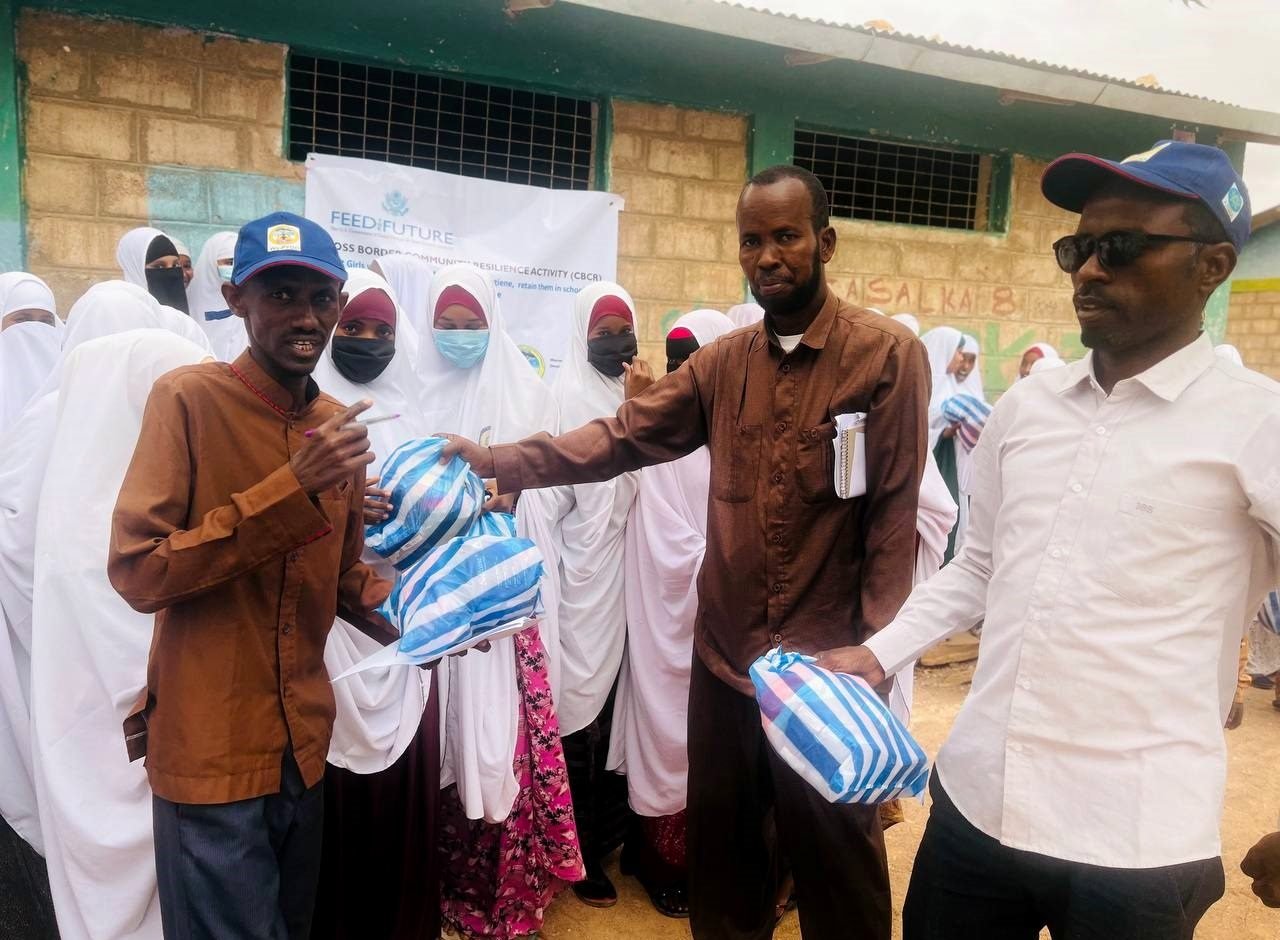
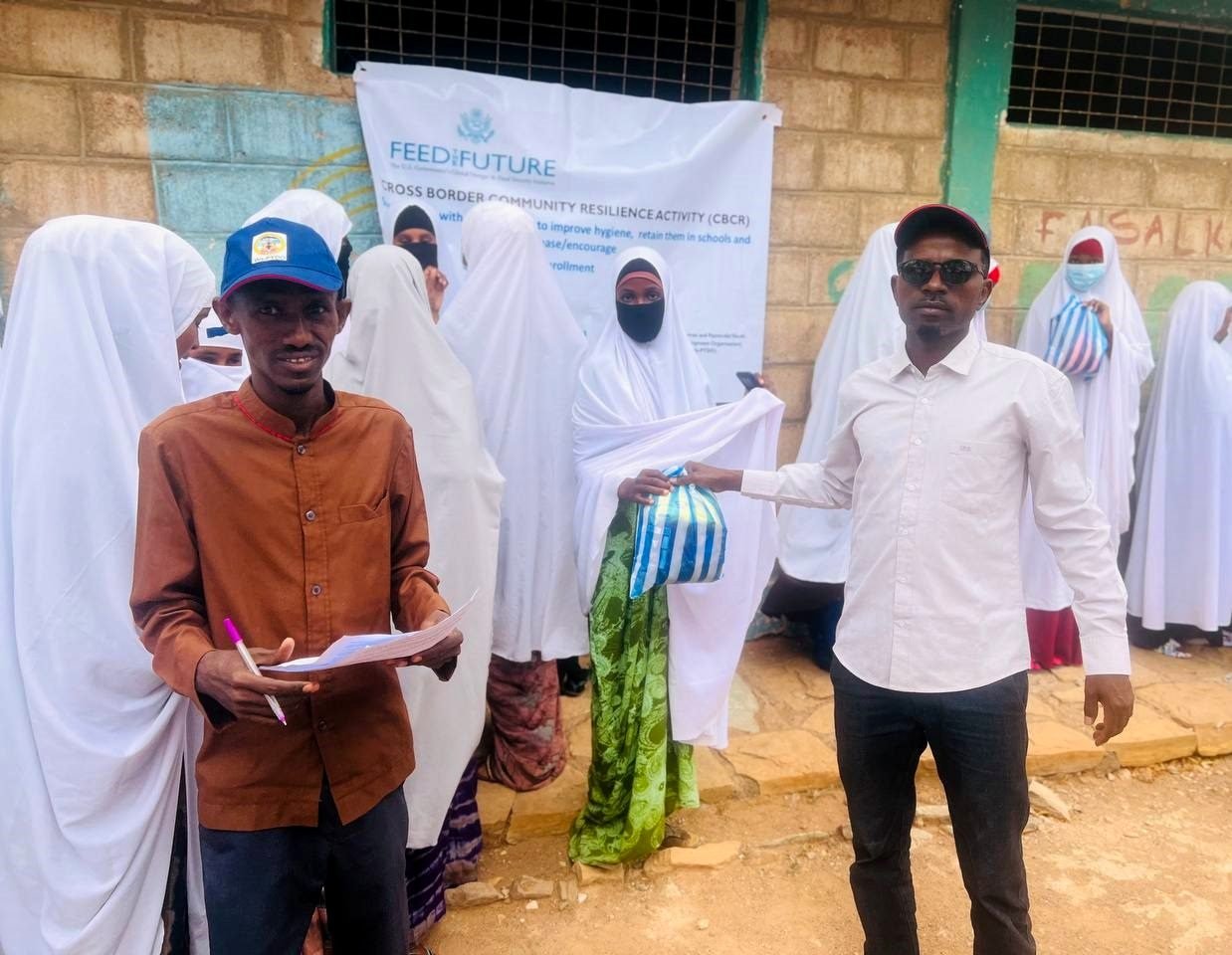
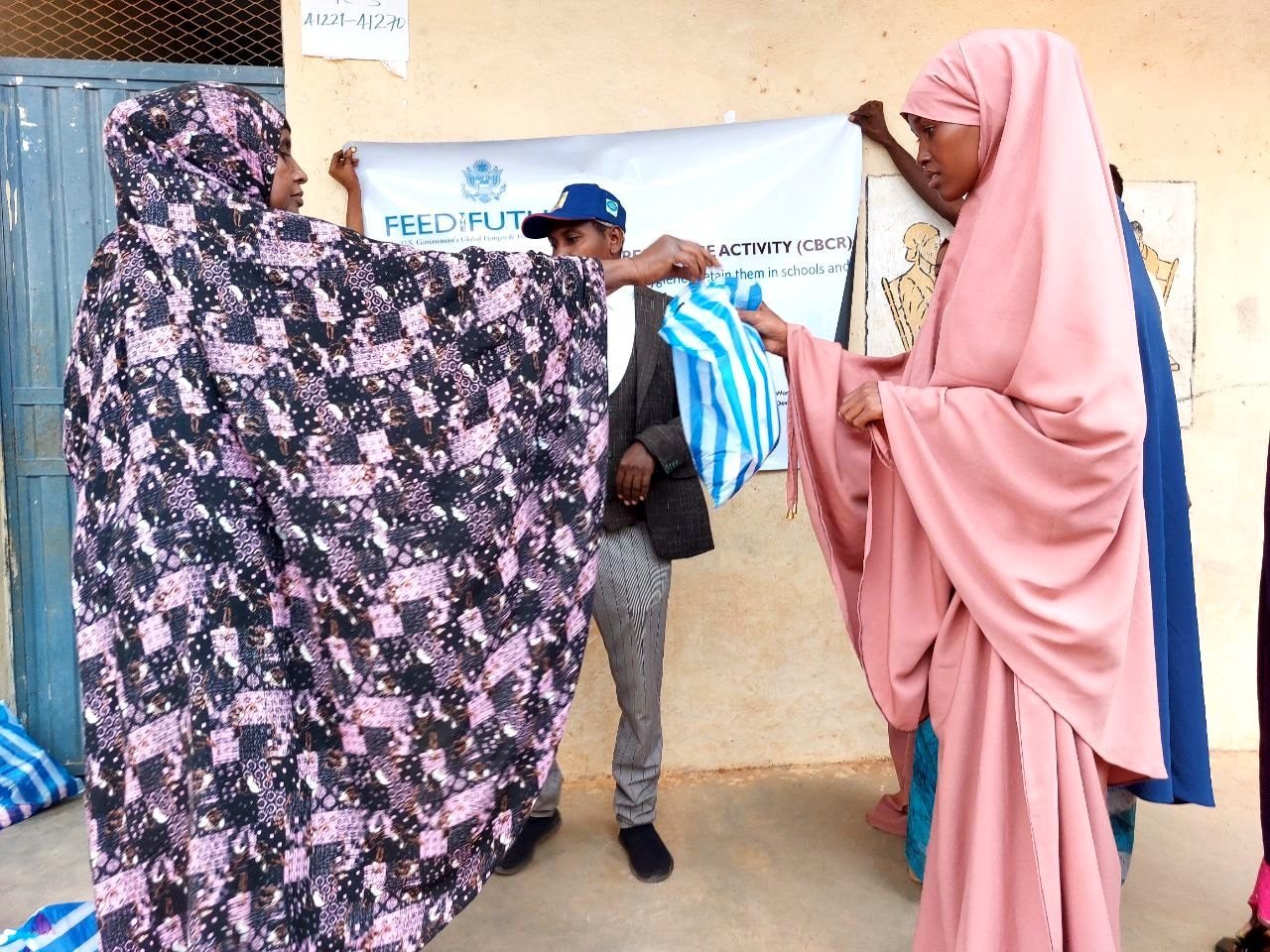
- Dignity kits for 400 schoolgirls — 160 in Dollo Ado, 120 in Dollo Bay and 120 in Bokolmayo — each containing soap, two packs of pads, tissue and four pairs of underwear
- Recipients chosen by a committee of the woreda education office, school principals, the woreda women’s office and the girls’ own representatives
Results
What came out of it
Compensation settled between two clans
The dialogue ended with agreed compensation settlements between the Garre and the Dogodia, and a commitment from both sides to carry out the decisions taken.
Trade and movement resumed
Formal communication between the two clans was re-established, agreements were reached on peaceful coexistence and resource sharing, and inter-clan trade and safe movement started again.
Resource committees back in operation
Traditional natural resource management committees were reactivated across the bordering districts.
Girls stayed in class
Teachers reported that the kits kept girls in school through the days they would previously have missed, and improved menstrual hygiene management.
Women trading with confidence
80 women who had never had formal training now keep books, understand a break-even point, and can approach a loan.
Every target met
45, 80, 45, 40 and 400 — each activity hit its planned number exactly, with nothing outstanding at close.
The Garre and Dogodia are brothers, the same descendants on one clan tree, and they always fight and kill each other for no reason… Let us implement the decision from this venue.
Mohumed Abdalle, Dogodia clan elder, at the Moyale cross-border dialogue
“To empower women is to empower our nation”
Sangabo Ibrahim Hasan was one of the 30 women trained at the Bokolow displacement site. She runs a traditional tailoring business and a small shop selling clothes and drinks, and that income pays for her household and her children’s schooling. She wants to expand it and to train other women and young people — there is no vocational skills centre at the site.
Her recommendations to us were practical: start-up kits so a larger training centre could open, loans so young men and women can learn a marketable skill, and support that lasts long enough to build a household that can survive the next shock.
Madam Nuria, a teacher in Dollo Ado, spoke for the girls at her school because they were too shy to talk about menstruation in public. She confirmed the kits reached the girls who needed them and kept them in class. She also told us plainly what the limit was: “This is a half capturing of support, but it could have been good to reach all adolescent student girls.”
Dignity kit distributions
Dollo Ado, Dollo Bay and Bokolmayo high schools, 2023.
Peace work and livelihoods belong together
This project reached 610 people on USD 100,000. Talk to us about what a longer programme could do.