Livelihoods & Food Security
RESET Plus Innovation Project
Two farming kebeles, four legally registered cooperatives, two input supply centres — and a literacy class so members could read their own records.
Project at a glance
The idea
Move farming from surviving to trading
Full project title: Enhancing Farmers’ Livelihoods via Piloting a Model that Integrates Technology Transfer, Climate-Smart Agriculture and Social Transformation.
Wa-PYDO delivered Result 3 of a wider EU consortium: cooperative formation, access to farm inputs, capacity building and agricultural productivity. The aim was a shift out of subsistence farming — giving men and women farmers reliable access to inputs, the knowledge to use them, and a route to market.
The Liban Zone loses harvests to drought again and again. A farmer who cannot buy certified seed at the right moment, or who has to travel to Dollo Ado town and pay a middleman for fertiliser, does not get a second chance that season. So the project built the supply chain the farmers were missing, and put it in their own hands.
What we did
- Community mobilisation and consultation in Fikow and Boryale, through open dialogues with elders, women and youth leaders — 51 men and 52 women took part
- Two farmer groups formed, 20 members each, and taken through to legal registration as cooperatives
- Two input supply cooperatives — Daryeel and Midnimo — established and registered with the Regional Cooperative Promotion Bureau
- Two input supply centres built, with the project supplying industrial materials and the community contributing local materials and labour, then fitted out with office furniture and storage
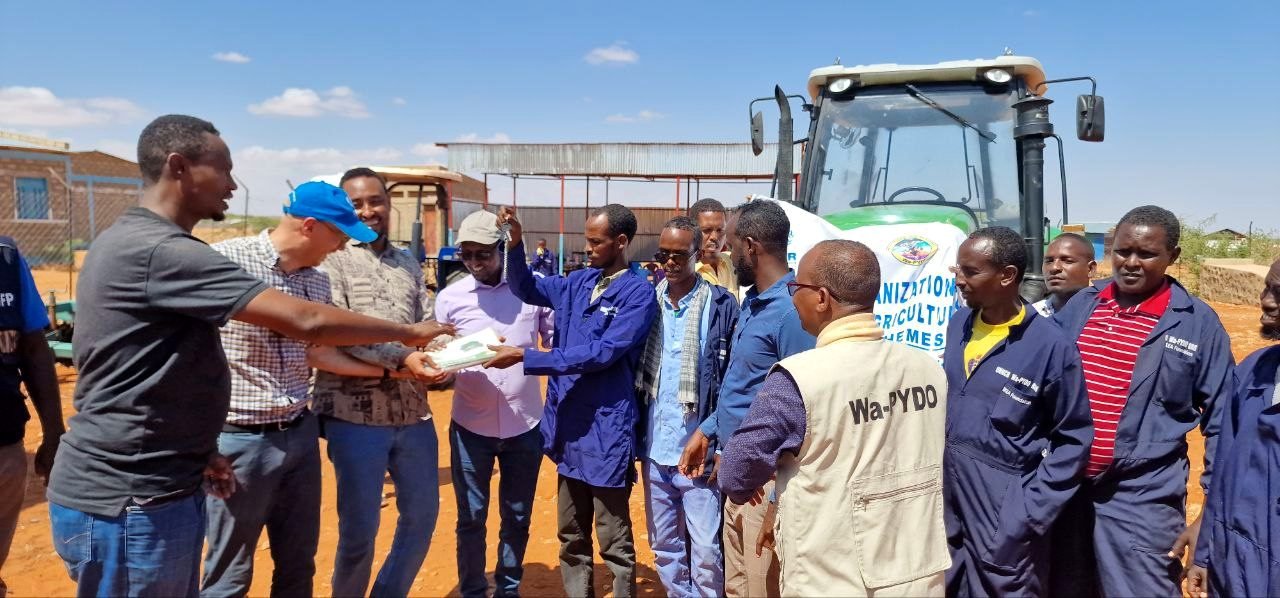
- Seed money provided so the cooperatives could buy fertiliser, onion seed, pesticide and spraying tanks — the first bulk order reached farmers on time
- Business skills, cooperative leadership and financial literacy training for 50 participants
- An adult literacy class for 40 women and young people — basic maths, the Somali alphabet and record-keeping — taught by a locally hired teacher
- A joint market assessment with COOPI to identify suppliers and buyers, linking the cooperatives to unions and traders in Dollo Ado
- Experience-sharing visits to established cooperatives in Buramino and Hilaweyn on input management, governance and market operations
- Climate-smart practice introduced: solar-powered irrigation, small-scale irrigation, soil moisture conservation, drought-resilient cropping and fodder production integrated with livestock
Results
Where it ended up
Four cooperatives, all legally registered
Two farmer groups and two input supply cooperatives, each certified by the Regional Cooperative Promotion Agency and given refresher training in governance, leadership and business planning.
A supply chain the farmers own
Two equipped input supply centres in the kebeles themselves, stocked and trading, connected to unions and traders in Dollo Ado.
Members who can read their own books
40 women and young people completed the adult literacy course, so cooperative records stopped being something only outsiders could check.
A model built to be copied
A small pilot, but a complete one — mobilisation, registration, infrastructure, working capital, skills and market linkage — designed to be repeated elsewhere in the Somali Region.
What we can and cannot claim
We publish what our records support. For this project that means activities, beneficiary numbers, cooperatives registered and infrastructure built. It does not include yield increases, income change or hectares brought under irrigation — those were not measured at the close of the project, and we would rather say so than estimate.
A pilot worth running again, at scale
Talk to us about extending the cooperative and input-supply model to more kebeles in Liban Zone.